Blog
Top French Doors Screen Options for Your Home
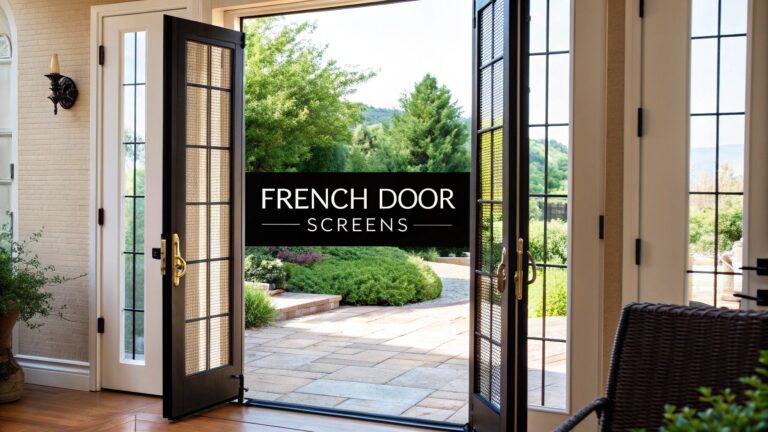
French doors are a stunning way to connect your indoor and outdoor living spaces, but they come with a classic dilemma: how do you enjoy a fresh breeze without letting in every bug in the neighborhood? It's a common frustration, but modern screen solutions mean you no longer have to choose between airflow and a pest-free home.
Think of it this way: you wouldn't wear hiking boots with a formal gown. In the same way, the right screen should complement your elegant French doors, not clash with them.
Why Finding the Perfect Screen Matters
We’ll explore all the possibilities, from retractable screens that vanish when you don't need them to classic sliding screens built for heavy use. My goal is to help you find that sweet spot between style, durability, and what you want to spend. Your French doors are a major feature of your home's character; the right screen is what makes them truly liveable.
It's clear that homeowners everywhere are looking for smarter, more attractive door solutions. This isn't just a niche interest—the market itself is booming.
The French door market was valued at around USD 2.5 billion and is expected to climb to USD 4.1 billion by 2033. A huge part of that growth comes from people wanting doors that are not only beautiful but also energy-efficient and practical. Discover more market growth insights on verifiedmarketreports.com.
This surge shows just how much people care about finding products that work with their home's design. A well-chosen screen is a huge part of this, giving you that fresh air and bug protection without ruining the open, expansive feel that made you fall in love with French doors in the first place.
Balancing Style and Practicality
Picking a screen isn't just about function; it's a design decision. A bulky, poorly-fitted screen can feel like an afterthought and completely obstruct the beautiful view you paid for. The best french doors screen options feel like they were designed as part of the door from day one.
As you start looking, ask yourself these simple questions:
- Aesthetics: How much does a completely clear view matter when the screens are open?
- Functionality: How often will you actually be using the screens? Will kids, pets, or guests be opening and closing them?
- Durability: Does your screen need to stand up to strong weather, enthusiastic pets, or a high-traffic entryway?
- Budget: What are you prepared to invest for a quality solution that will last for years to come?
Thinking through these points will make it much easier to sort through the different french doors screen options and find the one that’s a perfect fit for your home and lifestyle.
Understanding the Main Types of Door Screens
Picking the right screen for your French doors is a bit like choosing a car. A sleek sports car, a rugged SUV, and a practical sedan all get you where you need to go, but they deliver very different experiences. It's the same with door screens—each type has its own feel, function, and ideal purpose.
The three big players in the French door screen options game are retractable, sliding, and magnetic screens. Once you get a handle on how each one works, you'll be able to quickly zero in on the best fit for your home, your lifestyle, and your budget. This is the foundation for making a smart choice.
Retractable Screens: The Disappearing Act
Retractable screens have become the go-to choice for homeowners who want functionality without sacrificing style. Think of them as window shades for your doorway. The screen material neatly rolls into a slim, vertical cassette mounted on the side of your door frame. When you don't need it, it’s completely out of sight, leaving your beautiful doors and view untouched.
This “now you see it, now you don’t” quality is their biggest draw.
- Single Systems: If you typically only use one of your French doors to go in and out, a single screen that pulls across the entire opening is a perfect solution.
- Double Systems: For those who love throwing both doors open, a double system is the answer. It features two screens, one on each side, that meet and latch in the middle to create a seamless, bug-proof barrier.
These systems are a favorite for homes where the architectural charm of the French doors is a major feature that homeowners want to preserve.
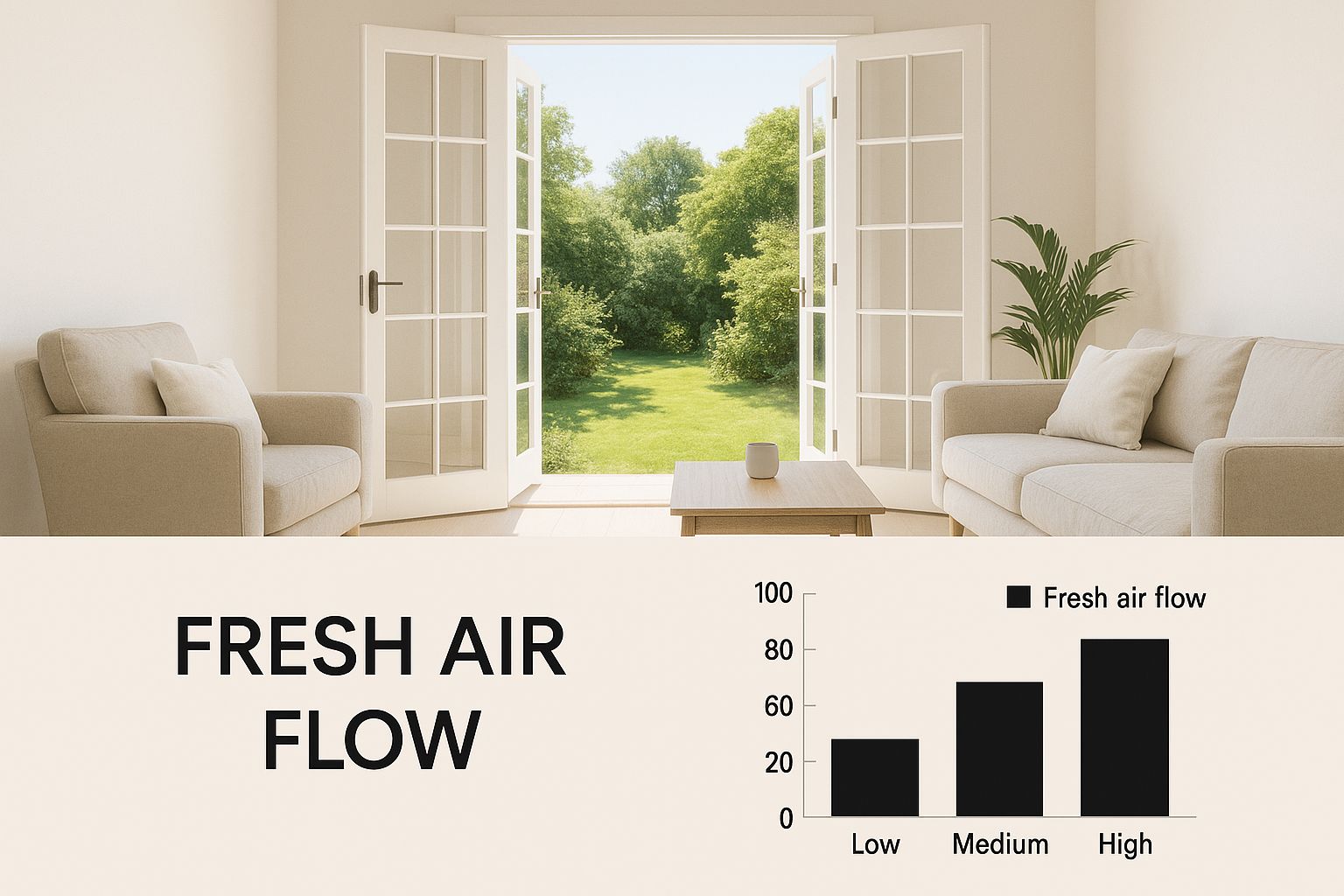
As you can see, a well-integrated screen lets the fresh air in without cluttering the elegant look of the doors, creating a comfortable space that feels connected to the outdoors.
At-a-Glance Comparison of French Door Screens
To help you quickly compare your options, here’s a high-level overview of the three main screen types. Think of this as your cheat sheet for narrowing down the choices based on what matters most to you.
| Screen Type | Best For | Visibility | Typical Cost | Durability |
|---|---|---|---|---|
| Retractable | Preserving views and aesthetics; frequent use | Invisible when not in use | Mid to High | Good to Excellent |
| Sliding | High-traffic areas needing a sturdy, permanent screen | Always visible | Mid-Range | Excellent |
| Magnetic | Budget-conscious or temporary solutions; rentals | Always visible, can look saggy | Low | Low to Fair |
This table should give you a clear starting point. A retractable screen is fantastic for aesthetics, a sliding one offers unmatched sturdiness, and a magnetic one is a great low-cost fix.
Sliding and Magnetic Screen Options
If a retractable screen isn't quite right for you, there are two other common alternatives.
Sliding screens are the traditional workhorse, operating on a track just like a standard sliding patio door. They're installed at the top and bottom of your door frame, giving you a solid, permanent screen. While they are incredibly robust, they are also always visible, which can detract from the classic, open look of French doors.
Magnetic screens are the simplest, most budget-friendly choice out there. They are usually just two mesh panels that hang in the doorway and snap shut with magnets after you walk through. They're a breeze to install, but they often lack the polished look and long-term durability of other systems, making them better suited as a temporary fix than a permanent investment.
The popularity of these solutions is overwhelmingly driven by homeowners. In fact, residential use makes up about 72% of the market share, particularly in sunny places like California and Florida where indoor-outdoor living is a year-round reality. People simply want to enjoy the breeze without inviting in a swarm of bugs, turning a good screen door into a household essential. You can dig into more of this market data in a full industry analysis on gminsights.com.
Retractable Screens: The Invisible Solution
Let's be honest, you chose French doors for their elegance and the expansive view they offer. The last thing you want is a clunky, permanent screen obscuring that beauty. This is where retractable screens shine—they're the disappearing act of the door world.
Think of it like a window shade, but mounted vertically beside your door. The screen itself lives inside a slim, subtle cassette. When you don't need it, it vanishes completely. When you want to let the breeze in and keep the bugs out, you simply slide it across. This "now you see it, now you don't" quality is what makes them a favorite among discerning homeowners.
How Do They Actually Work?
These systems are smartly designed for the way people actually use French doors. They aren't a one-size-fits-all product; they come in two main styles to match your door's function.
- Single-Panel Systems: Perfect if you typically only use one of your French doors. A single screen pulls across the entire opening from one side, securing on the other to form a complete barrier. It’s simple and effective.
- Double-Panel Systems: This is the go-to for true double French doors. You get a screen panel on each side of the frame. They slide out to meet in the middle, locking together with a satisfying magnetic clasp.
The double-panel setup means you can throw both doors wide open, creating that grand, seamless transition to your patio or yard, and still have a full-width screen ready to go. It feels less like an afterthought and more like a feature that was built into the door from the start.
Customization and Getting It Installed
Modern retractable screens are more than just a basic mesh. You can really dial them in to fit your specific needs and lifestyle.
Retractable screens offer a superior convenience, durability, and a seamless look that complements the elegance of French doors. They offer the luxury of disappearing into their protective housing when not in use, ensuring they don't obstruct your view or interfere with the aesthetics of your doors.
For example, if you have a dog that loves to scratch at the door, you can opt for a pet-resistant mesh that's built to withstand paws and claws. Another fantastic option is a solar mesh, which blocks a significant amount of UV rays. This not only protects your interior furnishings from fading but can also help keep your home cooler.
Now, what about installation? While some handy homeowners might be tempted to do it themselves, these systems require very precise measurements to work smoothly. A professional installation is almost always the best bet for a flawless fit that operates perfectly for years. If you're weighing your options, it's worth learning what a DIY retractable screen door installation involves to decide if it’s a project you're comfortable tackling.
Of course. Here is the rewritten section, designed to sound completely human-written, with a natural flow and expert tone.
Sliding Screens and Traditional Alternatives
Retractable screens are fantastic for their modern, disappearing act, but sometimes, the best solution is a tried-and-true classic. If your main goals are rock-solid durability and no-fuss operation, traditional french doors screen options like sliding or hinged systems are absolutely worth considering. They’re the workhorses of the screen world, built to handle high-traffic areas and last for years.
Think of a sliding screen system just like the screen on a standard sliding glass patio door. It runs on its own dedicated tracks at the top and bottom of your door frame. This setup lets one or two screen panels glide smoothly back and forth. It’s a design everyone instinctively knows how to use, which makes it incredibly practical for families and guests.
The biggest selling point here is their sheer sturdiness. The aluminum frames and secure track system create a really solid barrier that holds up to daily life far better than more temporary options. But that toughness does come with a trade-off.
The main drawback of a sliding screen is that it’s always there. Unlike a retractable screen that vanishes when you don't need it, a sliding screen always covers at least half of your French door opening. This can definitely get in the way of that grand, wide-open view that makes these doors so special in the first place.
So, you have to ask yourself what you value more day-to-day: a perfectly clear view or a screen that's always ready to go and built like a tank.
Pros and Cons of Sliding Screens
Making the right call means weighing the good against the bad. Here’s a quick breakdown to help you figure out if a sliding screen is the right choice for your home.
- Pro – Exceptional Durability: These screens are made to take a beating. If you have active kids, pets, or a constant stream of people coming and going, this is a huge plus.
- Con – Obstructed View: The biggest compromise is visual. The screens are a permanent fixture, which can take away from the elegant, open feel of your French doors.
- Pro – Ease of Use: The sliding action is simple and familiar. There's zero learning curve for anyone using the door.
- Con – Maintenance Needs: Those tracks are a magnet for dirt, leaves, and other gunk. They need regular cleaning to keep the screen panels from sticking and getting hard to move.
Hinged Screen Doors a Classic Alternative
Another traditional route you can take, though it's less common for French doors, is the hinged screen door. It's exactly what it sounds like: a separate, full-framed screen door that’s hinged to your door frame and swings outward, just like a classic front screen door.
These are a pretty good fit if your French doors swing inward. They offer a very secure barrier against bugs and are straightforward to use. The main headache is that you end up with a "double door" situation—you have to open the screen door, then the French door. This can feel a little clunky, especially in a busy entryway. And just like their sliding cousins, they are always visible, which is a major factor if you're trying to preserve the clean, architectural look of your French doors.
How to Choose the Right Screen Mesh
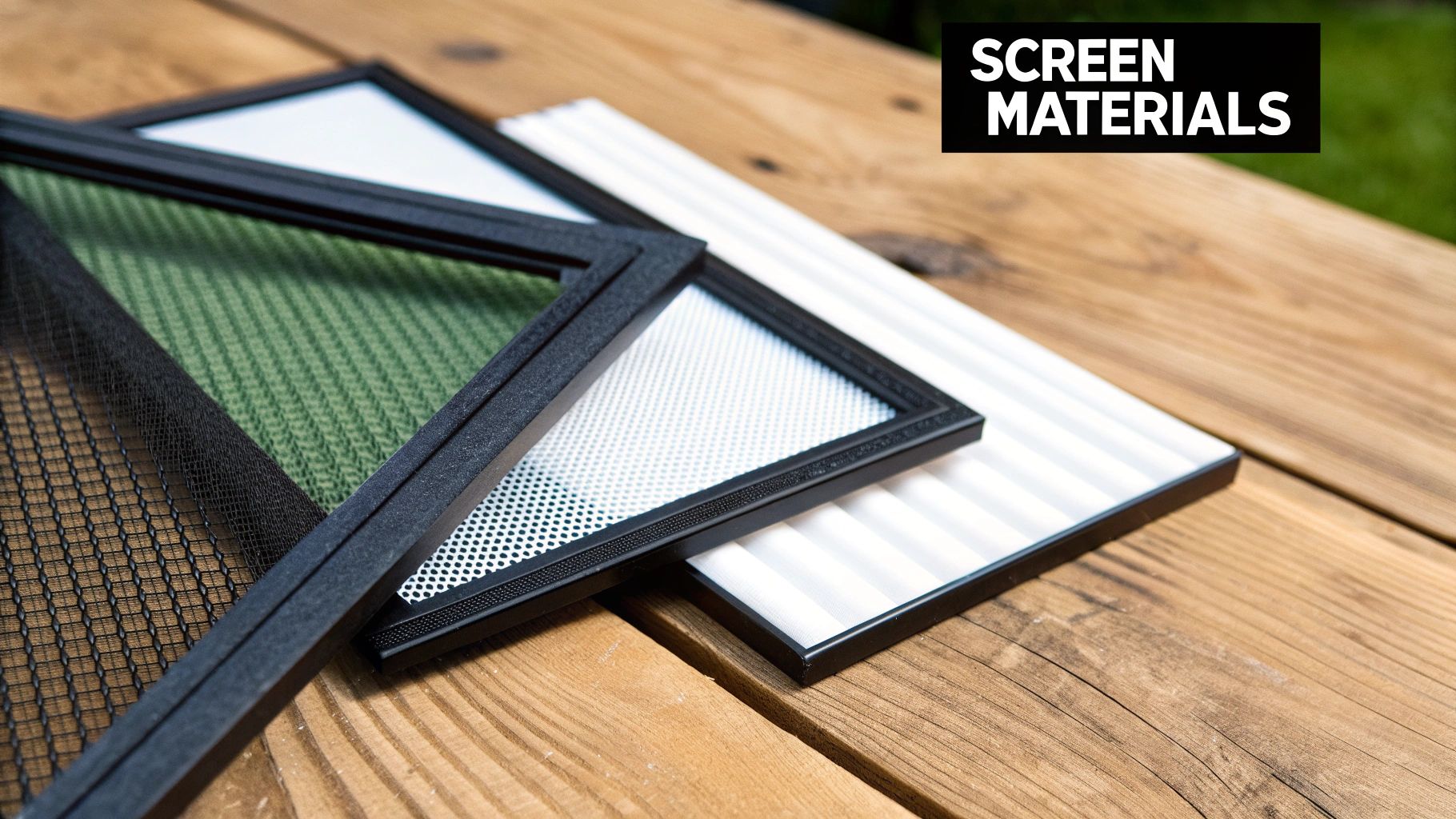
While the screen door frame usually gets all the attention, the mesh itself is the real workhorse. Getting this choice right is a big deal—it directly affects everything from how clearly you can see your backyard to how durable your door is, and even how much you spend on air conditioning.
Think of it like picking out fabric for a new coat. You wouldn't choose a light linen for a blizzard, right? The same logic applies here. The best mesh for your French doors depends entirely on your local climate, your family's lifestyle, and how much wear and tear the screen will face.
There’s no single "best" mesh out there. The right one is simply the one that fits your life. For many homeowners, standard fiberglass mesh does the job just fine. It's affordable, lets you see out clearly, and, most importantly, keeps the bugs out. But what if you have a golden retriever who loves to greet visitors with an enthusiastic scratch? Or toddlers who might lean against the screen? That’s when you need to look at tougher options.
Comparing Popular Mesh Materials
Understanding the trade-offs between different materials is the key to making a smart decision. Each one offers a unique set of pros and cons.
- Standard Fiberglass: This is the go-to, default choice for most screens. It’s flexible, easy on the wallet, and won't crease or dent if something bumps into it. It's a great all-around pick for general use.
- Aluminum Mesh: A definite step up in strength from fiberglass. Aluminum offers fantastic visibility and holds its shape well over time without sagging. The only downside is that a hard impact can leave a permanent dent.
- Pet-Resistant Mesh: For anyone with furry family members, this stuff is a lifesaver. Made from a heavy-duty, vinyl-coated polyester, it’s about 7 times stronger than the standard stuff. It’s specifically designed to stand up to claws, paws, and scratches without tearing.
- Solar Mesh: Also known as sun-blocking screen, this is a high-performance material that can block 80% to 90% of the sun's heat and glare. It’s a fantastic way to protect your floors and furniture from fading and can even lower your cooling bills. The trade-off? It does reduce visibility more than other types.
Making the right call means balancing what you need most. To get a more detailed look, you can explore the different types of window screen mesh, as many of the same principles apply to your French doors.
Factoring in Market and Cost Trends
The materials that make up your screen—whether fiberglass, aluminum, or that tough vinyl-coated polyester—are all part of a huge global supply chain. This means that wider industry trends can directly affect the price you pay.
The global market for doors was valued at USD 10.91 billion and is expected to grow to nearly USD 16.37 billion by 2032, thanks to housing growth around the world. But things like fluctuating raw material costs, which are often tied to oil and gas prices, can cause the final price of your screen to change. This bigger picture helps explain why the cost for what seems like a simple product can shift from one season to the next.
Getting Your Screens Installed and Keeping Them Like New
So, you've picked out the perfect screen for your French doors.So, you've picked out the perfect screen for your French doors. Now comes the part that ensures it works beautifully for years to come: installation and upkeep. The path you take really depends on the type of screen you've chosen. Some are a breeze for a weekend DIY project, while others are best left to a professional to get that seamless, factory-perfect operation.
Think about it this way: a simple magnetic screen can often be installed in minutes with adhesive strips. It’s a fantastic project for pretty much any homeowner. But when you get into more sophisticated systems like retractable screens, precision is everything. These need to be perfectly aligned and have just the right amount of tension to glide smoothly and disappear when you want them to. A professional has the experience—and the specific tools—to nail this, avoiding those annoying snags or uneven retractions that can pop up later.
A Smooth Start: Nailing the Installation
Whether you call in a pro or decide to go it alone, the entire project hinges on one thing: accurate measurements. Seriously, almost every installation headache I've ever seen comes down to a screen that was measured incorrectly from the start.
- For the DIYer: Measure, measure, and measure again. I always tell people to measure the door frame's width at the top, middle, and bottom. Then, use the smallest of those three numbers. This guarantees your screen will fit comfortably inside the opening without binding.
- Hiring a Professional: The beauty of hiring an expert is that they take on this responsibility. They'll measure everything precisely and can spot potential quirks with your door frame that you might not notice, recommending the best way to mount the screen for a perfect fit.
If you're on the fence about installing it yourself, it's a great idea to check out a guide first. Seeing a breakdown of how to install screens can give you a realistic sense of the tools and skills involved, helping you make the right call.
A Little Care Goes a Long Way
The good news is that keeping your screen in great shape is incredibly simple. A bit of regular attention is all it takes to prevent small annoyances from turning into real problems. It's no different than the basic upkeep you do for your car to keep it running well.
A consistent maintenance routine is the key to extending the life of your screen. Just 15 minutes of care a few times a year can prevent buildup in the tracks and keep the mesh in excellent condition, ensuring it operates as well in year five as it did on day one.
Start by giving the mesh a gentle cleaning every so often. A soft-bristle brush with a bit of mild soap and water works wonders for wiping away dust, pollen, and grime.
For retractable or sliding screens, the tracks are the most important part to maintain. Regularly vacuuming them out prevents dirt and small debris from causing the screen to stick or jam. A quick spray of a silicone lubricant on the tracks once or twice a year will keep everything gliding smoothly and quietly every single time.
Got Questions? We've Got Answers
You've explored the options, but a few questions might still be lingering. That's completely normal. Let's tackle some of the most common things people ask right before they make a final decision, so you can move forward with confidence.
What’s the Real Cost of French Door Screens?
This is usually the first question on everyone's mind, and the honest answer is: it depends. Think of it like buying a new appliance—you can get a basic, functional model or a high-end one with all the bells and whistles.
- Magnetic Screens: These are your most wallet-friendly choice. You can often find a decent set for under $50. They get the job done without a big investment.
- DIY Sliding Screen Kits: If you're comfortable with a weekend project, these kits offer a more permanent solution. Expect to spend somewhere in the $150 to $400 range.
- Professionally Installed Retractable Screens: For a truly seamless, premium experience, this is the way to go. A professional installation for a standard double door will typically run from $500 to $1,500. The final price tag is shaped by the brand you choose, the exact size of your doors, and any custom features.
Can I Put a Screen on My Inward-Swinging French Doors?
Yes, you absolutely can. In fact, most modern screen systems are designed specifically for this setup, which is the most common type of French door.
Retractable and sliding screen systems are almost always mounted on the exterior of your door frame. This clever design keeps them out of the way, allowing them to operate independently without ever interfering with your doors as they swing into the room.
What if your doors swing outward? No problem. You’ll just need an interior-mounted system, which is less common but definitely available.
Are Retractable Screens Tough Enough for Kids and Pets?
This is a huge concern for families, and rightly so. The good news is that high-quality retractable screens are surprisingly resilient, especially if you choose the right one. Many leading brands offer pet-resistant mesh that's far stronger than the standard stuff.
Here's the best part: they’re built to be forgiving. If a child or pet runs into the screen and pushes the mesh out of its track, you can often just guide it right back in—no tools needed. This self-correcting feature gives them a major edge over rigid screens that would dent, bend, or break, giving you priceless peace of mind in a busy home.
Ready to find the perfect, durable screen solution for your French doors? The team at Northwind Screen Co. offers expert installation of high-quality bug and sun screens, often with same-week service. Get your quick quote today and enjoy a pest-free home.
Thinking about a porch or patio rescreen?
Get a quick quote on custom screens, sun and solar screens, slider repairs, and patio rescreening. Same-week service and a lifetime guarantee.