Blog
Screen Glare Reduction: a Practical Guide for Homeowners
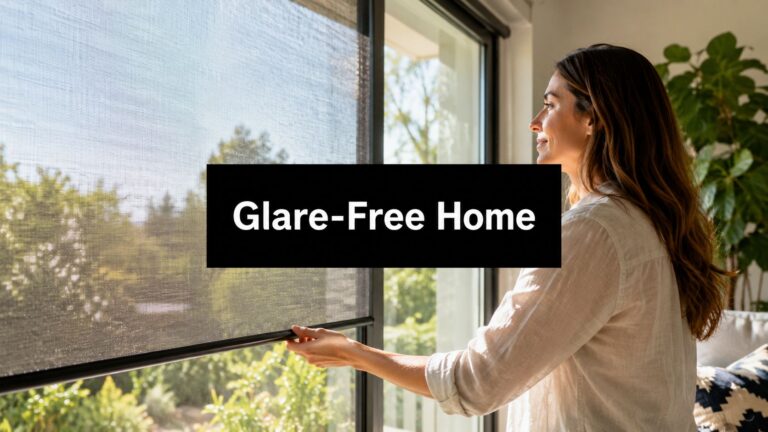
By midafternoon, a lot of Arizona homes start playing the same annoying game. The living room looks bright and inviting, but the TV turns into a mirror. The home office has a nice view, yet your monitor is washed out, your eyes are working harder than they should, and you keep shifting your chair like that will somehow fix the sun.
That problem gets worse in places like Phoenix, Scottsdale, Peoria, Cave Creek, and the rest of the Valley because the light is stronger, the angle changes through the year, and the heat adds another layer of punishment. Generic advice like "close the blinds" usually works for about five minutes. Then the room feels dark, the view is gone, and the glare still sneaks in from a different angle.
Good screen glare reduction is less about one magic product and more about matching the fix to the way sunlight behaves in your home. On patios, in west-facing family rooms, and in work-from-home setups near sliders, the right answer is often a combination of placement, light control, and the right screen or film where it matters.
Winning the War on Window Glare
A neighbor once described it perfectly. In the morning, her kitchen nook was the best place to answer emails. By lunch, the same spot felt unusable. Light bounced off the window, across the table, and straight onto her laptop. She'd close the blinds, then reopen them because the room felt gloomy. Later in the day, the living room TV had the same problem from a different direction.
That's how glare usually works in real houses. It doesn't stay politely in one corner. It moves.
In Arizona, the usual quick fixes often disappoint because they treat glare like a simple brightness issue. It's not. It's a reflection and angle issue. Sun coming through a west window, bouncing off a light tile floor, or hitting a glossy screen from the side can make a room feel harsher than it looks at first glance.
Why glare matters more than people think
If you work from home, glare slows you down. If you're trying to relax, it makes a room feel difficult to use. On a screened patio, it can ruin the whole reason you wanted that space in the first place.
The good news is you don't have to plan your life around the sun's schedule. A well-chosen permanent fix can keep the room bright without making the screen unreadable. That's the difference between blocking light and managing it.
Arizona homes need a different approach
The strongest solutions for screen glare reduction in high-sun climates start outside the glass whenever possible. Once harsh light has already flooded the room, you're trying to control damage. When you reduce it before it enters, the room becomes easier to live in all day.
That's especially true for patios, sliding doors, west-facing windows, and home offices with broad daylight exposure. Those spots need more than a decorator's solution. They need a sun solution.
First, Pinpoint Your Glare Problem
Before you buy anything, figure out exactly what kind of glare you're fighting. Most homeowners treat every bright room the same, but that's where money gets wasted. A west-facing den, a patio slider, and a loft office can all have glare for completely different reasons.
Start with timing
Walk through the room and answer a few plain questions:
- When does the glare show up? Is it a morning problem, a late-afternoon problem, or all day?
- What surface is causing it? The window might be the source, but the reflection may be bouncing off a floor, countertop, pool water, a parked car, or a neighbor's roof.
- Which screen suffers most? A TV, laptop, desktop monitor, tablet, or phone all react differently because of size, finish, and placement.
- Does heat arrive with the glare? In Arizona, glare and heat often travel together. If the room also gets hotter at the same time, your fix should address both.
- Do you get eye fatigue even when the room doesn't look too bright? Some glare problems come from washed-out contrast rather than obvious blasting sunlight.
Track the room in real use
You don't need fancy tools. You need honest observation. Sit where you normally sit. Watch the TV at the usual time. Open the laptop where you work. If you only test the room once, you'll miss the pattern.
Fixed treatments often fail in Arizona because the sun's altitude shifts seasonally. That mismatch is one reason generic anti-glare advice falls short. Research on indoor setups has found that a warm-white bias light at 10% luminance reduced perceived glare by about 27%, a useful detail for desks and displays even though many patio and outdoor work areas still need more targeted glare control.
That matters here because a solution that feels great in winter can fall apart in summer. High sun angles change the path of reflections. In desert light, a room can go from comfortable to unusable without any furniture moving at all.
Make a simple glare profile
Write down a short room-by-room note like this:
- Office facing east: workable early, glare on monitor by late morning.
- Living room west windows: TV reflection in late afternoon.
- Patio slider: bright all day, strongest discomfort from reflected light and heat.
- Upstairs loft: overhead brightness more annoying than direct beam.
This kind of note keeps you from overtreating one room and undertreating another.
If the glass is dusty or mineral-spotted, clean it before judging the room too harshly. Dirty glass can scatter light and make a glare problem look worse than it is. A good cleaning can help you see the true problem before you commit to screens, film, or interior treatments.
Exploring Your Glare Reduction Options
Once you know where the glare comes from, the choices get easier. Most homeowners are deciding between three broad categories: sun screens, window film, and interior blinds or curtains. All three can help. None is perfect in every room.
The trade-off comes down to where you want to stop the light, how much view you want to keep, and whether heat is part of the problem.
What each option does well
Sun screens do the heavy lifting outside the glass. That's a big advantage in Arizona. They cut harsh sunlight before it enters the room, which helps with both visibility and comfort. They're especially useful on west-facing windows, sliders, patios, and rooms that get punished in late afternoon.
Window film works directly on the glass. It can be a clean-looking option if you want a more minimal appearance and don't want an exterior screen frame. Film can reduce reflections and soften incoming light, but it usually asks you to accept a more fixed result. If the room's problem changes by season or by window orientation, film may solve one issue while leaving another.
Blinds and curtains are flexible and familiar. They let you adjust room conditions quickly. The downside is obvious. Once you close them enough to kill severe glare, you often lose daylight and the outside view that made the room attractive in the first place.
Where anti-glare filters fit
For computers and indoor displays, dedicated anti-glare filters can help more than people expect. A 2020 study in the journal Work found that using anti-glare filters led to a 37% reduction in subjective eye discomfort after four hours of screen work.
That doesn't mean a desktop filter replaces a room-level fix. It means the best results often come from treating the room and the screen itself. If your home office takes direct side light for half the day, fixing only the monitor is usually half a solution.
Glare reduction solutions at a glance
| Solution | Glare reduction | Heat blocking | View clarity | Cost |
|---|---|---|---|---|
| Sun screens | Strong in high-sun rooms, especially on direct-exposure windows | Strong, because light is reduced before entering | Good, especially with darker mesh choices | Moderate |
| Window film | Good on many glass surfaces, but depends on orientation and reflection pattern | Moderate to good | Good, but can feel more fixed once installed | Moderate |
| Blinds or curtains | Good when fully closed, inconsistent when partly open | Variable | Lowest when closed enough to stop harsh glare | Low to moderate |
| Anti-glare screen filter | Best for monitor or TV surface reflections, not whole-room sunlight | Minimal room heat impact | Preserves screen usability when chosen well | Low to moderate |
What works best in common Arizona scenarios
Here's the practical version.
- West-facing family room: Sun screens usually outperform blinds alone because they reduce incoming intensity before the TV has to deal with it.
- Home office near a window: Desk repositioning plus a monitor filter can work well. If the whole room is still harsh, exterior treatment becomes more important.
- Patio with screens or sliders: Interior drapes often aren't enough because the light and heat load are already high.
- Bright room that still needs openness: Layering can work. Exterior screening for control, lighter interior treatment for flexibility.
If you have to choose between keeping the view and stopping the glare, start by asking where the light should be intercepted. In Arizona, outside the glass is usually the smarter first move.
Choosing the Right Sun Screen for Your Home
When a homeowner says they need something for that brutal afternoon sun, they're usually talking about more than glare. They want to sit in the room, keep some view, cut down the harshness, and avoid turning the house into a cave. That's why sun screens are often the most practical answer in Arizona.
The tricky part is choosing the right screen for the right opening.
Think in outcomes, not just percentages
People often focus on screen blockage percentages first. That's understandable, but the better question is what the room needs. A lightly exposed kitchen window may only need moderate control. A west slider that blasts a living room every afternoon may need a much stronger screen.
Darker screen colors also surprise people. In real use, a darker mesh often gives a clearer outward view than a lighter one because it reduces visible glare and visual bounce. From inside the home, charcoal and other dark tones usually look cleaner and less distracting than bright or shiny mesh.
Match the screen to the window exposure
Use the window orientation to guide the choice.
- East-facing windows: usually morning-specific. These can often tolerate a lighter touch if the room isn't used heavily at that time.
- South-facing windows: steady brightness. These often benefit from balanced glare control without making the room feel flat.
- West-facing windows and patio sliders: stronger sun screening usually earns its keep.
- Screened patios: choose with both light and durability in mind, because the material has to live with intense UV and heat.
Don't ignore the screen surface itself
When the problem is on the device, not just the room, the specs matter. The most effective physical screen glare reduction uses an anti-reflective film with high visible light transmittance and very low reflectance, and a good multi-layer optical coating can reduce glare dramatically by scattering light rather than allowing mirror-like reflection.
That tells you something useful as a homeowner. Not every anti-glare label means much. Good products protect clarity while reducing reflection. Cheap ones can dull the screen and still leave you fighting bright spots.
A simple way to choose
- Main issue is TV or monitor reflection inside one room: start with screen placement and a true anti-glare surface treatment.
- Main issue is harsh sunlight entering the home: prioritize an exterior sun screen.
- Main issue is a patio or sliding door with both heat and visibility problems: choose a stronger, durable screen option meant for heavy sun exposure.
- Main issue is preserving daytime usability without closing blinds: darker exterior screening is often the better fit.
If you're comparing actual exterior screen options for your windows, our sun and solar screen service overview can help you see which applications make sense for standard windows, patios, and sliders.
Installation: DIY Versus Calling a Professional
Some screen projects are very DIY-friendly. Some look DIY-friendly until you're halfway through them with a crooked frame, loose spline, and mesh tension that waves every time the light hits it. That's the honest version.
If you're handy, patient, and only working on a simple opening, doing it yourself can be satisfying. But glare-control screens aren't just cosmetic. If the fit is sloppy, the screen can bow, gap, or look uneven, and the room still won't perform the way you hoped.
What DIY usually involves
A basic install sounds simple on paper. Measure the opening. Cut the frame or replace the mesh. Roll in the spline. Reinstall the screen. In practice, a few things trip people up fast:
- Measurement errors: A small mistake can turn a snug fit into a rattling one.
- Tension problems: Too loose and it sags. Too tight and the frame can twist.
- Material mismatch: Mesh chosen for bugs isn't always right for intense sun control.
- Rework: One bad cut can mean buying material twice.
Why professional installation often looks better and lasts better
An experienced installer knows how the screen should sit, how tight the mesh should be, and which material makes sense for a patio versus a bedroom window. That sounds basic, but it's what separates a functional patch from a clean finished result.
There's also a practical safety argument. Glare is a visibility issue, not just a design complaint. Studies on night driving have found that a large share of drivers report debilitating glare, which shows how widespread and disruptive uncontrolled light reflection can be. Different setting, same principle. Reflections make people work harder to see.
A professional install is usually worth it when the opening is large, the exposure is severe, or the screen needs to look like it came with the house.
When calling a pro makes the most sense
Consider professional help if any of these apply:
- Large sliders or patio openings.
- Multiple west-facing windows.
- Custom-sized frames.
- You want color and mesh consistency across the home.
- You don't want to redo the job in a season.
Enjoy Your Glare-Free Home for Years to Come
Once the right screen glare reduction setup is in place, the home changes in a very practical way. You stop managing the room hour by hour. The office becomes usable when you need it. The TV stays watchable without a blanket over the windows. The patio feels like part of the house again instead of a bright space you avoid until sunset.
That's the true payoff. Not just less glare, but less fuss.
Keep the screens performing well
Maintenance is simple, but a few habits matter.
- Clean gently: Use mild cleaning methods and avoid harsh chemicals that can wear down materials over time.
- Check frames and corners: A small loose edge can become a larger fit problem during windy seasons.
- Watch patio exposures: Patios and sliders take more sun and dust than sheltered bedroom windows.
- Reassess room changes: New furniture, a new TV location, or a different desk setup can alter reflection paths.
Think long term, not just immediate relief
The best glare fix is the one you don't have to think about every afternoon. That usually means choosing a solution that matches both the sun exposure and the way you use the room. Arizona homes reward that kind of planning because the light is strong enough to expose shortcuts quickly.
A lot of homeowners start this process thinking they just need darker blinds. Then they realize the actual issue is where the light enters, how it reflects, and whether the room needs exterior control instead of another interior workaround.
Good glare control lets you keep the daylight and get rid of the punishment.
If you live in Phoenix, Scottsdale, Peoria, Cave Creek, or nearby areas, solving it well usually means looking at the whole picture. Window direction, patio exposure, screen type, mesh color, installation quality, and the way the room is used all matter.
If you're ready to make your windows, sliders, or screened patio easier to live with, Northwind Screen Co. handles new sun screens, rescreening, repairs, patio screen work, quick quotes, and same-week service for Arizona homeowners who are done fighting glare every afternoon.
Thinking about a porch or patio rescreen?
Get a quick quote on custom screens, sun and solar screens, slider repairs, and patio rescreening. Same-week service and a lifetime guarantee.