Blog
Security Screen Double Doors: A Phoenix Homeowner's Guide
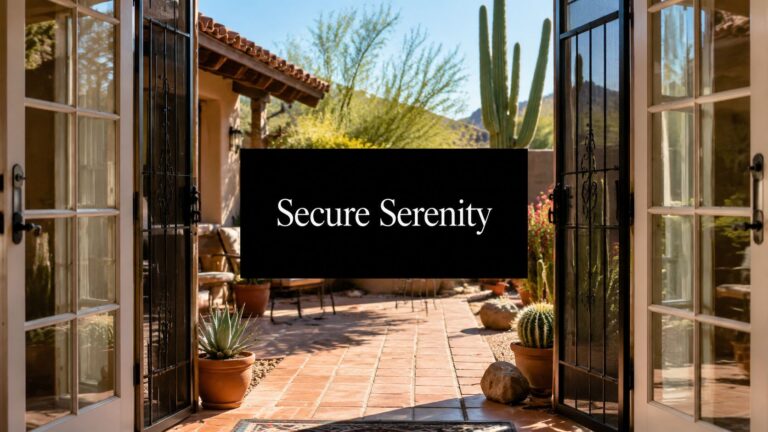
Phoenix homeowners usually reach the same point with double doors. The weather finally gives you a decent evening, you want the house open, and then you stop with your hand on the handle because a regular screen door doesn't give you much confidence.
That hesitation is justified. A standard bug screen keeps insects out. It doesn't do much for security, and on a wide double-door opening, the weak spots get more obvious fast. The center seam matters. The hardware matters. The fit matters even more when heat and dust are part of daily life.
A good set of security screen double doors solves a very specific Arizona problem. You get airflow, visibility, and a real physical barrier that looks like part of the home instead of an afterthought. The trick is knowing what works long term, especially in Phoenix, where sun exposure and temperature swings punish cheap hardware.
Enjoy the Breeze Without Compromising Your Security
A lot of homes in the Valley have French doors or wide patio openings that are perfect for evening ventilation. They also create a frustrating choice. Keep the main doors closed and lose the breeze, or open them and rely on a flimsy screen that feels more like a suggestion than protection.
That's where security screen double doors make sense. They aren't the old heavy bar-style setups many people picture first. The better versions are cleaner-looking, built around strong frames and security mesh, and they let you enjoy airflow without leaving the opening exposed.
What homeowners often miss
The question I hear most around double doors isn't really about style. It's about how the two panels work in real life. People want to know whether the inactive panel can stay secure while the active panel handles daily use and ventilation.
That concern is valid, and it's often glossed over in consumer guides. The key point is that strong multi-point systems can allow both panels to lock at the center and frame at the same time, unlike the standard latch clips on regular screens. That matters when you're trying to secure a double opening and still use it for airflow.
Why this fits the way people live in Phoenix
In Phoenix, fresh air time is selective. You don't leave doors open all day in summer, but you absolutely want that option in the cooler mornings, after sunset, and during the better parts of the year. A proper security screen setup lets the house breathe without making the opening feel vulnerable.
That's also why I tend to frame these doors as part of a broader physical security plan, not just a screen upgrade. The best result is simple. You open the main doors, lock the security doors, and stop thinking about it. That's what people are buying. Not just metal and mesh, but the ability to use their home the way they wanted to in the first place.
Decoding Materials and Security Features
On a wide double-door opening, weak parts show up fast. A door can look sharp in the showroom and still disappoint once it starts dealing with daily use, afternoon heat, and a lot of sun on the frame and hardware. Start with the three parts that do the actual work: frame, mesh, and locking system.
Homeowners in Phoenix often get tripped up by products that borrow the look of a security door without being built like one. Decorative screen doors and true security screens are different products. One mainly finishes the opening. The other is built to resist cutting, prying, and flex at the meeting point where double doors are most vulnerable.
The mesh needs to do more than keep bugs out
Mesh is one of the easiest ways to tell whether you're looking at a security product or a dressed-up screen. Security-grade mesh is typically stainless steel, held tight in a frame system designed to resist cutting and push-through. Ordinary insect screen is made for airflow and pest control. It can tear, stretch, or pull loose with far less effort.
That difference matters even more on paired doors because the opening is wider and sees more movement over time. If one panel gets used constantly and the other mostly stays shut, the system still has to stay square and keep the mesh secure in both panels through heat cycles and regular traffic. When you compare options side by side, our screen and mesh options are a good place to start on the material category worth asking about.
The locking system has to secure both panels
Double doors are where good hardware separates from hardware that only sounds good on a quote. A proper double-door security setup should secure the active panel well and also lock the inactive panel in a way that resists movement at the top and bottom, not just at the handle height. If the fixed-side panel can shift, rattle, or flex at the center meeting point, the whole opening gets easier to attack. In Phoenix homes, this detail is also a long-term ownership issue. Repeated expansion and contraction from heat can expose slop in cheaper locking setups much sooner than many homeowners expect.
Good multi-point hardware secures the top, middle, and bottom with one locking action. That layout spreads load across the frame instead of asking one latch to do everything.
A single latch in the middle may feel acceptable on day one. On a large opening, it gives force one obvious point to work against.
Frame material changes how the door lives with you
The frame carries the mesh, supports the hinges, and gives the lock something solid to engage. In the field, the usual comparison is steel versus heavy-duty aluminum, and each has trade-offs.
| Material | Primary benefit | Best for | Consideration |
|---|---|---|---|
| Steel | Strong, rigid feel | Homeowners prioritizing maximum toughness | Heavier operation can matter on large double openings |
| Heavy-duty aluminum | Lighter daily use and cleaner finish options | Patio and French door openings where easier operation matters | Build quality varies, and thin frames do not age well in high heat |
I usually tell homeowners to think about the next ten summers, not just the install day. Steel gives a solid feel, but extra weight on a frequently used double opening can be noticeable. Heavy-duty aluminum is often the better day-to-day choice in Phoenix if the frame is built well and the corners, hinges, and lock reinforcements are done right. Cheap aluminum is where people get burned. It may look fine up front, then loosen up, fade, or start feeling sloppy after enough sun exposure.
Finish quality also matters more here than many buyers realize. Powder coating generally holds up better than thin painted finishes under Arizona UV, especially on dark colors that absorb more heat. A door that faces west will usually age harder than one under a deep porch, even if both use the same frame.
Understanding Security Door Costs and Value
The price on security screen double doors usually comes down to five things. Opening size, how custom the layout is, the hardware package, finish quality, and how much fitting the opening will need. On double doors, labor matters more than homeowners expect because two panels have to meet cleanly, swing freely, and lock without binding in heat. Cheap quotes often leave out the details that affect ownership after the install.
What usually increases the price
A wider patio opening costs more than a basic front entry. Custom widths, sidelight conditions, uneven masonry, and older homes with openings that are slightly out of square all add fabrication time and installation time. Proper sizing matters here, because double-door measurements need more than a quick tape check.
Hardware is another big separator. A double-door system is not just two doors side by side. One panel is usually the active door, and the other is the inactive panel. The inactive side still needs to secure properly, usually with top and bottom flush bolts or another integrated locking method. That detail gets missed in a lot of price shopping, and it matters. If the inactive panel does not lock down firmly, the whole opening is weaker and tends to feel sloppy over time. These details usually move the quote:
- Opening size and custom layout: Bigger or less standard openings require more fabrication and adjustment.
- Hardware package: Better hinges, locksets, closers, and inactive-panel hardware cost more but usually operate better year after year.
- Finish quality: Powder-coated finishes usually hold up better in Phoenix sun than cheaper painted finishes.
- Installation conditions: Out-of-square openings, tile thresholds, stucco returns, and limited clearance can all increase labor.
Value shows up after the first summer
A lot of homeowners compare a security screen double door to a basic screen replacement and stop there. That is not the right comparison. You are paying for airflow, a hardened barrier, custom fitting, and hardware that has to keep working on a larger opening.
In Phoenix, long-term value has a lot to do with sun exposure. West-facing doors run hotter, dark finishes absorb more heat, and lower-grade parts show wear faster. I have seen doors that looked good on install day but started sticking, fading, or loosening up after enough hot seasons because the quote was built around price instead of service life.
Good value is not always the lowest bid. Good value is a door that still lines up, latches, and locks both panels correctly after years of use, including the inactive side that many buyers forget to ask about. That is usually where better materials and better hardware earn their keep.
Your Installation From Measurement to Walkthrough
Most of the headaches with double security doors start before installation day. They start with bad measurements, assumptions about square openings, or hardware selected before anyone checks the actual jamb, threshold, and swing clearance. A professional installation should feel orderly. Not rushed, not vague, and not dependent on on-site improvising.
What the process should look like
- On-site measurement comes first. Double doors need precise width, height, and clearance checks. The opening may look symmetrical and still be slightly out.
- Fabrication follows the measured opening. This isn't where you want an off-the-shelf approach.
- Scheduling should happen after the build is ready. That avoids partial installs and unnecessary return trips.
- Installation day should include fitting, adjustment, and hardware testing.
- Walkthrough matters. Homeowners should leave knowing how the active panel, inactive panel, locks, and handles operate.
What installers should verify before they leave
A clean install isn't just about getting the frame anchored. It's about making sure the pair functions as a system.
- Panel alignment: The meeting point should look even and close cleanly.
- Latch engagement: Locks should engage without forcing the handle or key.
- Threshold fit: The bottom clearance needs to work with the slab, tile, and seasonal movement.
- Swing and stop points: Doors shouldn't rub, drift, or bounce back.
Phoenix homeowners should also think about HOA approval before anything is built, especially for front entries or street-facing elevations. Color, frame profile, and exterior appearance can all matter.
Long-Term Care for Your Investment in the Arizona Sun
The part most buyers don't hear enough about is ownership after installation. In Phoenix, the sun doesn't just fade finishes. Heat affects fit, movement, and how consistently hardware lines up over time. That's why long-term maintenance matters more on double doors than many people expect. You don't have one moving panel and one simple latch. You have a wider system with more alignment points and more chances for a small issue to turn into a daily annoyance.
What Arizona weather changes over time
One of the more overlooked realities is how thermal expansion and UV exposure affect weave tightness and locking alignment over time, which is a major maintenance issue in high-heat markets like Phoenix. Materials heat up, cool down, and move. On a double-door opening, that can show up as slight resistance in the lock, a panel that stops lining up perfectly, or hardware that feels fine in one season and slightly off in another.
Security hardware rarely fails all at once. More often, it starts with a door that feels a little harder to close, a latch that needs a second try, or an inactive panel that doesn't seat as cleanly as it used to.
A maintenance routine that actually helps
You don't need a complicated program. You need a consistent one.
- Clean the frame and mesh: Phoenix dust builds up fast. Wipe the frame down and clean the mesh gently so dirt doesn't sit in corners and edges.
- Inspect the lock and latch points: If operation changes, don't ignore it for months. Small alignment problems are easier to correct early.
- Lubricate moving parts as needed: Hinges, lock cylinders, and moving hardware should operate smoothly, not stiffly.
- Check the bottom area: Tracks, thresholds, and lower latch areas collect debris that interferes with movement.
For homeowners also managing solar control and exterior screen exposure, our Arizona sun screens are worth reviewing because they speak to the broader reality of what constant sun does to exterior screening products.
When repair makes more sense than replacement
Not every issue means the whole door is bad. Sometimes the problem is a worn closer, a lock adjustment, hinge alignment, or mesh damage limited to one panel. That's especially true when the original frame is still solid. The mistake is waiting too long. A door that drags or latches poorly gets used less carefully, and that usually leads to more wear, not less. If the system is worth having, it's worth maintaining before minor problems become structural ones.
Your Questions Answered and Next Steps
A lot of homeowners get the main idea quickly. They want ventilation, they want a stronger barrier than a regular screen, and they want the doors to look right on the house. The remaining questions are usually about daily living.
Can a pet door be added to a security screen double door?
Sometimes yes, but it needs careful planning. A pet door changes the panel, the mesh opening, and sometimes the rigidity of the assembly depending on product design and placement. On a double-door setup, I'd be cautious about cutting into the panel that handles the most security duty unless the system is designed for it. If a pet door is a must-have, bring it up at the start, not after fabrication. Retrofitting is where compromises usually show up.
Will these doors make the home look too heavy?
Not if the product matches the architecture. The better security screen double doors read as part of the entry, not a separate layer bolted on later. Frame profile, color, handle style, and sightlines matter a lot more than homeowners expect. Cheap products stand out. They often look bulky, generic, or too shiny. Better doors usually look quieter and more intentional.
The best compliment a security door gets is that visitors don't immediately think of it as a security product. They just think the entry looks finished.
Are the locks easy for everyone in the house to use?
They should be. A door can be secure without being awkward. The right hardware should engage cleanly, and everyone who uses the opening regularly should know how the active panel and inactive panel work. This is especially important in homes with kids, older adults, or frequent guests. During the final walkthrough, don't settle for a quick demonstration. Have the household members who matter most try the locks themselves.
Do security screen double doors replace the main doors?
No. In most homes, they work as a secondary barrier in front of the existing main doors. That's part of what makes them useful. You can open the primary doors for air and keep the security layer closed and locked. That setup is a big part of their value in Phoenix. You're not choosing between openness and security every time the weather turns nice.
What should you do before asking for quotes?
Keep it simple:
- Take photos of the opening from inside and outside.
- Note how the doors are used most days. Ventilation, pets, guests, pool access, or front-entry traffic all matter.
- Check for HOA requirements if the opening is visible from the street.
- Ask about lock operation on the inactive panel, not just the active one.
- Ask what maintenance will look like in Phoenix heat, not just how the doors look on day one.
Security screen double doors are one of the few upgrades that change how a home feels immediately. You use the opening more. You get airflow without second-guessing it. And if the door is built and installed properly, it doesn't feel like a compromise.
If you're ready to price out options or fix an existing screen setup, Northwind Screen Co. offers same-week service, quick quotes, and help with new screens, rescreening, slider repair, and security door screen work across the Phoenix area. Text or call 555-555-0100 to get started.
Thinking about a porch or patio rescreen?
Get a quick quote on custom screens, sun and solar screens, slider repairs, and patio rescreening. Same-week service and a lifetime guarantee.