Blog
Sliding Screen Door Track Repair: A Complete DIY Guide
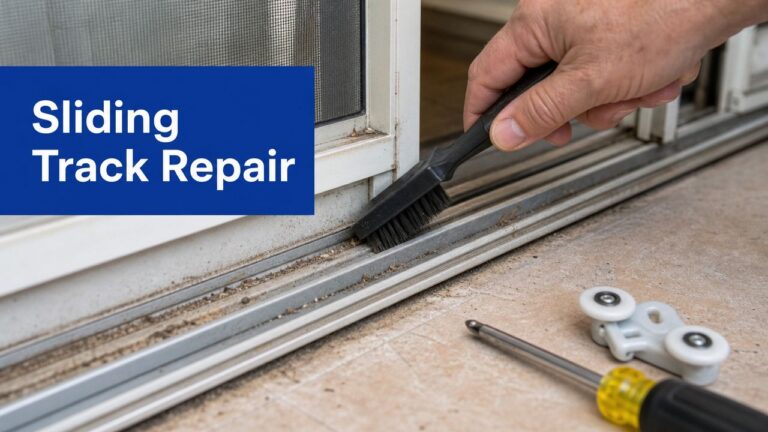
Your sliding screen door starts dragging, grinds like it's full of sand, or jumps the rail when you try to close it. Most homeowners assume the track is shot. They start shopping for parts before they've done the one thing that fixes the problem most often. That's usually backwards.
In real sliding screen door track repair, the first job isn't replacement. It's diagnosis. A door that feels broken may only be packed with dirt, pet hair, dried mud, or old residue that's forcing the rollers to fight their way across the track. That's good news, because the easiest repair is also the one people skip most.
Is Your Sliding Screen Door Really Broken?
A stuck screen door feels like a hardware failure. Sometimes it is. But dirt accumulation causes a large majority of sliding screen door track problems, so most homeowners should treat the track like a cleaning problem first, not a parts problem.
When the track is dirty, the signs are usually pretty consistent. The door feels rough the whole way. You hear grit. The bottom rail has visible buildup in the corners. The rollers may still be fine, but they can't glide over packed debris.
A damaged track behaves differently. Resistance often shows up in one spot. You may see a dent, a flattened lip, or a section that looks twisted. If the door keeps popping off in the same place, that points more toward alignment or physical damage than simple grime.
Quick checks before you buy anything
Use this short diagnostic pass before you remove the door:
- Look into the lower channel: If you see dust, hair, leaves, or packed dirt, start there.
- Slide the door slowly: Notice whether the drag is constant or only happens in one location.
- Check for wobble: A side-to-side wobble often points to roller adjustment, not immediate track replacement.
- Inspect the track edge: Cracks, crushed metal, or a bent rail usually mean cleaning alone won't solve it.
- Watch the frame as it moves: If the frame looks twisted, the problem may not be the track at all.
Most homeowners save themselves time and money by treating the easy cause first. A careful cleaning tells you a lot. If the door improves right away, you've confirmed the track was the main issue. If it still binds after cleaning, then you move on to screws, rollers, alignment, and only then replacement.
Gather Your Tools and Materials
Set your tools out before you touch the door. That sounds basic, but it saves a lot of fumbling once the panel is half-lifted out of the frame. Sliding screen doors are light enough for one person to handle, but awkward enough to bend a corner or strip an adjustment screw if you keep stopping to look for a brush, driver, or replacement part.
For a lot of homeowners, the track is not the expensive part of the problem. Dirt is. I keep my basic kit focused on cleaning first, because that solves more rough-sliding doors than replacement parts do. One extra item belongs in that kit too. Check the screen mesh tension before you assume the track is failing. If the mesh is loose or over-tightened from a past rescreen, it can rack the frame slightly and make the door drag like the track is bad.
For basic cleaning and diagnosis
Start with the tools that help you confirm the cause:
- Vacuum with a crevice tool for pulling packed debris out of the lower channel.
- Stiff brush for breaking loose dirt in the corners and along the track walls.
- Damp cloth for wiping away the fine residue left after brushing and vacuuming.
- Silicone-based lubricant for the track after cleaning and drying.
- Phillips and flathead screwdrivers for roller adjustment screws and loose frame hardware.
- Work gloves for handling sharp aluminum edges safely.
- A small flashlight for spotting crushed spots, hair buildup, and roller wear inside the channel.
Silicone works well here because it reduces friction without leaving the heavy, sticky film that oil-based sprays often leave behind. Keep the application light. A soaked track picks up fresh grit fast. Before you move on to deeper repair, press lightly on the screen mesh in the center of the panel. It should give a little, but it should not sag badly or feel drum-tight. If the frame bows when you do this, the door may be fighting its own tension, not just the track.
For deeper repairs and replacement work
If the door still binds after cleaning and inspection, bring out the second group of tools:
- Pliers for stubborn fasteners and small hardware.
- Replacement screws in case the originals are rusted, stripped, or too loose to hold adjustment.
- Putty knife or thin pry tool for guiding parts apart without gouging the frame.
- Replacement rollers if the door still drags after the track is clean and the adjustments are correct.
- Level if you are installing a new track section or checking whether the frame is sitting out of square.
Lay everything within arm's reach of the opening. Good prep makes the work cleaner, faster, and a lot less frustrating. It also helps you separate a simple cleaning job from a door that needs rollers, track work, or frame correction.
Your Step-by-Step Track Repair Method
You slide the door open, it grinds halfway, then jumps the last few inches. A lot of homeowners assume the track is shot at that point. In my experience, the track is often fine. Packed dirt, sticky residue, a loose fastener, or a door frame under bad mesh tension causes the drag far more often than actual metal failure. Start with the simplest fix and prove each step before you move on. That saves time, saves parts, and keeps you from pulling apart a door that only needed maintenance.
Start with a true deep cleaning
Open the door enough to expose the lower rail. Brush out leaves, pet hair, and the heavier dirt first, then vacuum the full channel with a crevice tool. After that, wipe the track with a damp cloth so you are not leaving behind fine grit or old spray residue. Run a fingertip along the channel when it dries. If it still feels sandy, it is still dirty.
This is the step people rush, and it is the one that fixes the biggest share of sticky screen doors. A track can look clean from above and still have a packed line of grime down in the corners where the rollers ride.
Check mesh tension before you blame the track
Before adjusting anything, press lightly on the screen mesh near the center of the panel. The mesh should give a bit. It should not sag badly, and it should not feel so tight that the frame bows. This gets missed all the time. If the mesh is over-tightened during a past rescreen, the frame can rack slightly as the door moves. That makes one corner drag and makes the track look like the problem. If the frame twists when you press the mesh, correct that tension issue before you chase the rollers or rail.
Lubricate with restraint
Once the track is clean and dry, apply a light coat of silicone spray. Keep it controlled. The goal is a thin film on the contact surfaces, not a wet track. If the door was treated with oil spray in the past, expect some sludge. Clean that off fully before adding fresh lubricant or you will keep grinding dirt into the rollers.
Tighten the hardware before touching the roller screws
A loose screw can shift the rail just enough to make the door scrape in one spot. Check the track fasteners and any accessible frame screws. Tighten what bites. Replace what spins. Pay attention to small clues:
- Screw heads sitting proud of the track.
- A slight gap between the rail and frame.
- Frame corners that move when you push on the door.
Those problems can mimic a bad roller.
Adjust the bottom rollers in small increments
If the door still drags after cleaning and tightening, adjust the bottom rollers. Most screen doors have an adjustment screw near each lower corner. Turning it changes the roller height and how the door sits on the track. Go a quarter-turn at a time. Test the door after each change.
Raise the side that scrapes. Lower the side that rides too high or throws the latch out of line. If you are not sure which side is causing the bind, watch the bottom edge while you move the door slowly. The problem side usually shows itself.
Test the full travel slowly
Do not judge the repair with one quick shove. Slide the door from one end to the other at a slow, even pace. Watch the lower frame, listen for scraping, and feel whether the rollers are rolling or skidding. Check for these signs:
- Drag that starts in the same spot every time.
- A corner that dips or lifts during travel.
- A scraping sound instead of a rolling sound.
- A latch side that no longer lines up cleanly.
A door that improves after cleaning and adjustment usually had a maintenance problem. A door that catches in one exact location, even after the steps above, usually has damage you can see once you inspect the rail closely.
Replace the track only when you can see real track damage
Track replacement belongs at the end of the process. Use it when the rail is bent, cracked, badly worn, or pulled loose in a way screws will not correct. A dirty or slightly dry track does not need replacement. Neither does a door that is really fighting roller wear or frame tension.
Homeowners often underestimate this job. You may need to remove the panel, match the profile of the old rail, and set the replacement so the rollers sit square from end to end. If the shape is off, the door may move worse with the new part than it did with the old one.
One last caution. Do not force a stubborn door through the rough spot. Repeated forcing flattens the rail, chews up the rollers, and turns a simple service call into a parts job.
Dealing with Bent Tracks and Broken Rollers
Some doors won't respond to maintenance because the hardware is past the point of cleanup. When that happens, you need to decide whether you can correct the damage or whether the part is done.
A bent track usually shows itself in one clear area. The door catches in the same place every pass. You may see a flattened lip, a ripple in the metal, or a section where the roller wants to climb out of the channel. Broken rollers show up differently. The door may sag, scrape, wobble, or feel like one corner is carrying all the load.
What you can try and what you shouldn't
Minor bends can sometimes be corrected carefully. Use a wood block against the metal and tap gently so you spread the force. Don't hit the track directly with a metal hammer. That usually makes a bad shape worse. Rollers deserve the same honesty. If the wheel is cracked, worn unevenly, or no longer turns smoothly, adjustment won't save it. Replace it. Here's a practical split:
- Try repair when the bend is slight and the track profile is still mostly intact.
- Replace the track when the rail is cracked, sharply deformed, or worn enough that the roller no longer sits securely.
- Replace rollers when the wheel is damaged, seized, or visibly uneven.
- Inspect both together because a bad roller can chew up a good track, and a bad track can ruin a new roller.
How to choose the right replacement part
Match the old part, not what looks close on the shelf. Bring the roller assembly with you if possible. On tracks, measure the profile and compare the shape, not just the length. A roller that sits too high, too low, or on the wrong rail shape will keep the door from running properly even if the part is brand new.
If the track and roller have both worn each other down, replacing only one side often leaves you with a half-fix.
That's the trade-off on older doors. Sometimes the least expensive part isn't the smartest repair. A fresh roller on a chewed-up rail can still drag. A new track under a failed roller won't stay new for long.
Advanced Troubleshooting When the Problem Persists
If you've cleaned the track, adjusted the rollers, and the door still sticks, stop assuming the track is the problem. A common misdiagnosis happens when screen mesh tension alters roller alignment and creates sticking that feels like a track issue.
This shows up a lot after a recent rescreen. The door doesn't close cleanly, the frame seems slightly twisted, and one corner drags even though the track is clean. The problem may be that the mesh was installed too tight, which can pull on the aluminum frame and change how the rollers meet the rail.
Signs the mesh tension is the real problem
Look for these clues:
- The door started sticking after new mesh was installed.
- One corner of the frame appears slightly racked.
- Roller adjustment improves one side but makes the opposite side worse.
- The track looks clean and intact, but the frame still binds.
A normal track problem usually stays in the track. A tension problem often changes the shape of the door enough that the rollers stop sitting square.
A simple cross-check
Remove the door and set it on a flat surface. Sight along the frame. If it looks twisted or bowed, the track may be innocent. Press lightly on the corners and check whether the frame rocks. Then inspect the mesh. If it looks drum-tight and the frame seems pulled out of square, that's your clue. The fix isn't more lubricant. It's correcting the frame or rescreening with proper tension so the rollers can sit naturally again.
DIY Repair Costs vs Calling a Professional
Cost is where a lot of homeowners make the decision. The cheap version of this job is very cheap. The mechanical version isn't. Minor DIY maintenance like cleaning and lubricating can cost as little as $25, while replacing a track and roller combination typically costs $200 to $450. If you hire a pro for broader sliding door repair work, labor and complexity can push the total much higher.
Sliding screen door repair cost comparison (2026 estimates)
| Repair task | DIY cost | Professional cost | DIY time estimate |
|---|---|---|---|
| Clean track and lubricate | About $25 | Higher than basic DIY maintenance | Short afternoon |
| Tighten screws and adjust rollers | Minimal parts cost | Higher than basic DIY maintenance | Moderate DIY session |
| Replace track and roller combination | $200 to $450 | $200 to $450 plus labor, varies by scope | Longer repair |
| Major structural repair | Usually not practical as DIY | Can reach around $2,500 for severe structural damage | Not a DIY job |
A table like this helps, but cost isn't the only factor. Frustration matters. So does your tolerance for pulling the door out, matching parts, and reinstalling everything without bending the frame.
When calling a pro makes sense
A professional is usually the better call when:
- The track is visibly bent or cracked.
- The rollers are worn and hard to match.
- The frame may be twisted from mesh tension issues.
- You've already spent time on cleaning and adjustment with no result.
If you'd rather skip the trial and error, Northwind Screen Co. can help with screen door repair, rescreening, and slider issues without turning your weekend into a parts hunt. If your door still drags after cleaning, or you suspect roller, frame, or mesh-tension problems, getting a skilled repair tech involved is often the fastest path to a door that slides the way it should. Text or call 555-555-0100 to get started.
Thinking about a porch or patio rescreen?
Get a quick quote on custom screens, sun and solar screens, slider repairs, and patio rescreening. Same-week service and a lifetime guarantee.