Blog
Three Season Porch Guide for Phoenix Homeowners
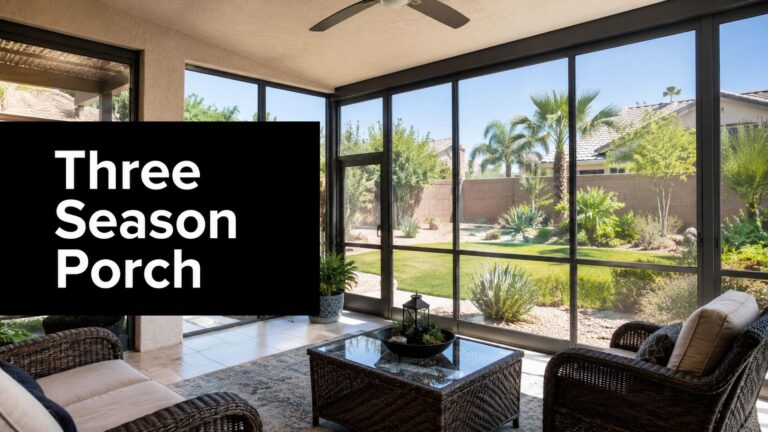
By late spring in Phoenix, a lot of patios turn into dead space. The furniture gets hot enough to avoid until sunset, dust settles on every horizontal surface, and bug season shows up right when the evening breeze finally feels good. Homeowners still want the outdoor feel, but they don't want to sit inside a blast furnace or a cloud of gnats to get it.
That's where a three season porch makes sense in the desert. It gives you a protected outdoor room without going all the way to a fully insulated addition. In Phoenix, that middle ground is usually the smart play. You keep airflow, cut down on bugs and blowing debris, and gain a space that works for much more of the year than an open patio.
Reclaiming Your Outdoor Space in the Desert
A three season porch in Phoenix usually starts with a simple goal. You want to use the covered patio you already paid for, not just look at it through the back door.
What separates it from a screened patio is the level of enclosure and control. A basic screened-in area is mostly about bugs. A true three season porch is built to handle changing conditions better, often with a mix of screen panels, window sliders, or removable panels so the space stays usable through spring, summer evenings, fall, and the cooler parts of winter. It's still not a four-season room. It usually isn't tied into full climate conditioning, and that's exactly why the budget stays more reasonable.
Why Phoenix homeowners lean toward this option
In this climate, a four-season room can solve heat but it also pushes the project into a different category of cost, code, glass, and cooling demand. A three season porch keeps the outdoor character intact while reducing the problems that make patios hard to enjoy here.
That balance is one reason interest keeps growing. The global market for three-season sunrooms is projected to nearly double from USD 390 million in 2025 to USD 750 million by 2034, according to industry projections. Homeowners are clearly putting money into protected outdoor living space.
A well-planned porch also plays nicely with the rest of the house. If the adjacent interior room already struggles in summer, it's smart to look at nearby shade, airflow, and whether the home's cooling setup is doing its job, so the indoor side of the wall isn't overlooked while the outdoor side gets upgraded.
What works better than generic national advice
Most national articles are written for humid climates or cold-weather shoulder seasons. Phoenix has different pressure points:
- Sun load: West-facing patios take a beating in the afternoon.
- Dust: Fine desert dust gets into tracks, corners, and screen weave.
- Seasonality: Evening use matters more than all-day summer use.
- Shade value: A porch that cuts glare and radiant heat feels better even when the air temperature is still high.
That's why the most successful desert three season porch projects focus less on insulation and more on screening strategy, panel choice, orientation, and serviceability. If you can sit out there comfortably with moving air, manageable sun, and less debris, the porch is doing its job.
Designing Your Porch: Screens, Windows, and Beyond
The design phase decides whether the porch feels breezy and useful or stiff and underused. In Phoenix, the enclosure choice matters more than the furniture. Start there.
The three main enclosure directions
Here's the practical comparison most homeowners need before they start selecting trim colors or ceiling fans.
| Enclosure type | Best use in Phoenix | Main advantage | Main trade-off |
|---|---|---|---|
| Screen panels | Patios used mostly in cooler mornings, evenings, and bug season | Maximum airflow | Less dust control and less weather protection |
| Sliding window panels | Homeowners who want flexibility through the year | Can open for breeze or close for wind and debris | More moving parts to maintain |
| Fixed glass panels | Spaces where weather protection matters more than ventilation | Cleaner enclosure and stronger barrier from wind | Can trap heat if the design ignores orientation and shade |
A lot of desert projects land in the middle. Full screens are excellent when airflow is the priority, but fixed glass can make a porch feel too closed up if the structure gets direct sun. Sliding panels often give the best mix of control and comfort because you can react to the season instead of living with one setting all year.
Screens versus glass in real daily use
Screen-only porches feel the most open. They're great for early mornings, dinner hours, and the months when the weather gives you a break. But they also let more dust through, and they won't do much when monsoon winds start blowing sideways.
Glass shifts the porch toward a sunroom feel. That can be useful, especially if you're trying to block wind and debris, but glass alone isn't a cure for desert heat. If the patio faces the wrong direction and the roof design doesn't help, the room can gain heat fast.
Many homeowners end up choosing a hybrid setup. They use framed openings designed for window sliders, removable panels, or screen-and-window combinations that can adapt over the year. That route makes the porch more versatile and easier to tune to the Phoenix climate. For examples of panel and opening options, it helps to look at porch window screens and slider configurations.
The right enclosure isn't the one with the most material. It's the one you'll actually open, close, clean, and live with.
Design details people miss early
A three season porch shouldn't be designed like a patio afterthought. The openings need to work with furniture placement, traffic patterns, and how people really enter the space. If the main view side also takes the strongest afternoon sun, that opening deserves extra planning.
Three overlooked decisions matter a lot in Phoenix:
- Track location: Low tracks collect dirt fast. If sliders are part of the design, choose hardware and layout that can be cleaned without a fight.
- Panel size: Oversized panels look clean, but they can be cumbersome if they need seasonal removal or repair.
- Door placement: A door that opens into the prevailing wind path often becomes the weak spot for dust entry.
Code points that can't be treated as finish details
Any project involving glazed panels needs to account for safety glass requirements before materials are ordered. Building codes require that glazed panels near the floor or adjacent to doors use safety glass, either tempered or laminated, that meets CPSC 16 CFR Part 1201 or ANSI Z97.1 standards.
That matters because homeowners often focus on frame color and visibility first, then learn later that certain locations need a different glass spec. It's better to identify those openings at the start than replace panels after inspection.
Essential Construction and Framing Insights
A porch conversion only works long term if the structure underneath is right. In Phoenix, people often assume the existing patio cover or slab is "probably fine." Sometimes it is. Sometimes it isn't even close to what a proper enclosure needs.
Where the build actually starts
Most homeowners picture the project beginning with screen panels or window frames. However, the fundamental starting point is structural attachment. Proper construction involves securing a ledger board to the house, framing the perimeter with rim joists using joist hangers, and ensuring the entire structure is level and square before installing floor joists and sheathing.
That sequence matters because every panel, slider, and door depends on a stable opening. If the frame is out of square, the symptoms show up later as sticking sliders, uneven gaps, loose screen tension, and water or dust infiltration around the edges.
What professionals check before enclosure work
On a Phoenix patio conversion, the early inspection usually comes down to a handful of practical questions:
- Attachment point: Is the house connection solid enough for the added load?
- Existing slab condition: Is the concrete stable, cracked, sloped, or already moving?
- Roof support: Are the posts and beam doing real structural work or just supporting a lightweight cover?
- Opening geometry: Are the spans suitable for the type of screens or sliders being planned?
This isn't DIY trivia. It's the difference between a porch that stays aligned and one that starts binding after the first season of expansion, dust, and daily use.
Wood movement, settling, and sun exposure don't forgive sloppy framing. Screen systems always reveal what the structure is doing underneath.
Desert-specific construction choices
Phoenix doesn't have the same freeze issues as cold regions, but desert exposure creates its own demands. Material movement under heat is real. Sealants age hard in direct sun. Painted and unfinished surfaces degrade faster when UV exposure is ignored.
That's why pre-finishing and protecting lumber matters even here. The framing may be hidden later, but hidden material still expands, dries, and weathers. If the structure includes wood members, they should be sealed correctly before they disappear behind trim and panels.
The mistake that gets expensive later
The most common failure point isn't usually the mesh. It's the assumption that enclosure work can hide a marginal patio structure. It can't.
If the roofline sags, if the slab pitches the wrong way, or if the perimeter frame was never meant to carry enclosed panels, the porch may look fine at handoff and start causing trouble later. A clean finish never compensates for bad geometry.
Choosing the Right Screens for the Phoenix Climate
In Phoenix, the screen material isn't a small accessory. It's the system that decides whether the porch feels usable or exposed.
A generic insect screen can keep out larger bugs, but that's not enough for desert living. Sun, glare, fine dust, and seasonal pollen present significant challenges. If your three season porch is meant to be comfortable, the mesh choice has to match those conditions.
Why standard bug mesh often falls short
Basic bug screen works when your priority is airflow and not much else. On a shaded patio with limited wind exposure, it can be perfectly adequate. On a west-facing Phoenix patio, it usually leaves too much heat and brightness in the space.
That's where solar screen products start to earn their keep. They help reduce glare, soften the light, and make the porch feel less harsh during long bright afternoons. They also protect nearby finishes and furniture better than standard mesh. Homeowners comparing options often benefit from seeing how solar screens for windows and patio-facing openings are configured in actual residential settings.
A porch can have excellent framing and good-looking finishes, but if the mesh is wrong for the exposure, people stop using the room.
The overlooked upgrade for dust and allergy season
One of the most useful developments for desert porches isn't flashy. It's removable micro-mesh inserts.
An emerging trend among homeowners in markets like Phoenix is retrofitting porches with removable micro-mesh inserts specifically for pollen season, a tactic that can extend comfortable use by weeks. That matters here because pollen and dust often become the hidden reason a porch sits empty even when the temperature is otherwise manageable.
Matching screen type to the patio exposure
A good screen plan starts with orientation, not brand names. In practice, these pairings tend to make sense:
- West-facing patios: Lean toward stronger sun-control mesh and darker screen fabrics that reduce glare.
- North-facing patios: You can usually preserve more openness and airflow because direct solar pressure is lower.
- Dust-prone lots near open desert or active roads: Finer mesh options become more attractive, especially on the most exposed sides.
- Homes with heavy evening use: Visibility and breeze may matter more than maximum solar block.
What actually performs well
The best-performing Phoenix porches usually don't rely on one material everywhere. They use a smarter mix. A high-exposure side may need solar mesh. A breezier side may stay more open. A seasonal insert can handle pollen periods without changing the whole enclosure permanently.
That approach gives you a porch that feels intentional instead of overbuilt.
Budgeting Your Project and Understanding the Value
The money question is straightforward. Is a three season porch worth doing in Phoenix if you're not building a fully conditioned addition?
In many cases, yes. Not because it behaves like interior square footage, but because it solves a real livability problem at a lower cost than a four-season build.
What the project may cost
A three-season porch typically costs between $15,000 and $30,000 in warmer climates and can recoup 45% to 55% of its cost at resale, based on sunroom cost versus value data. That same data notes that three-season rooms compare favorably with a basic screen room on resale value while remaining less expensive than a full four-season room.
Phoenix projects can move within that range depending on design choices and site conditions. The biggest cost drivers are usually:
- Enclosure type: Screens cost less than more elaborate slider or glass systems.
- Existing structure condition: If the patio cover, slab, or framing needs correction, the budget rises fast.
- Finish level: Flooring, electrical, doors, paint, and trim can change the scope more than homeowners expect.
- Custom openings: Non-standard spans and shapes often add fabrication complexity.
How to think about return
The resale value isn't the only return. Daily use matters too. If the patio is currently too hot, dusty, or bug-prone to use comfortably, converting it can add practical square footage to your life even if it doesn't appraise like a conditioned room.
That said, a three season porch is still not valued the same way as a full interior addition. Buyers usually see it as a strong lifestyle feature. Appraisers typically treat it more cautiously. That's normal.
Where overspending happens
The usual trap is mixing goals. If you want an outdoor-feeling room, build a strong three season porch. If you want true indoor conditioning year-round, budget for a different class of project.
Problems start when homeowners try to get four-season performance from three-season materials. That's when costs creep up, expectations miss, and the porch ends up in the middle with no clear identity.
Long-Term Care, Rescreening, and Professional Service
Desert maintenance is never optional. A three season porch in Phoenix collects dust in tracks, corners, and mesh faster than most homeowners expect. The good news is that routine upkeep is simple if you stay ahead of it.
What to clean and how often
The most important maintenance items are the least glamorous:
- Screen surfaces: Rinse or gently wash off dust buildup before it gets ground into the mesh.
- Slider tracks: Vacuum first, then wipe. Muddy track sludge forms when dust meets even a little moisture.
- Frames and corners: Check for packed debris where wind pushes dirt against the frame.
- Door hardware: Latches and rollers wear faster when grit is allowed to sit.
A porch usually ages well when these areas are cleaned consistently. It starts looking old fast when the tracks are neglected and the mesh stays dirty for long stretches.
What homeowners can handle themselves
Minor upkeep is usually manageable. Light cleaning, spot checks for small tears, and watching for loose spline or sagging screen tension are all reasonable homeowner tasks.
If a small hole appears, deal with it early. Tiny damage rarely stays tiny in a high-use opening or a windy exposure. The same goes for a slider that starts dragging. Friction plus dust only gets worse.
If the panel feels harder to move than it did last month, that's already a maintenance issue.
When to call a pro
Professional service makes more sense when the work affects fit, alignment, or material selection. Full rescreening, solar mesh upgrades, slider repair, and replacing multiple porch panels usually go better when handled with the right tools and replacement materials.
Call for help when:
- The mesh is brittle or loose across multiple openings.
- A slider won't track correctly after cleaning.
- You want to upgrade from standard bug mesh to sun-control or finer mesh.
- Frame corners are loosening or the panel no longer sits square.
A good three season porch shouldn't be treated like a one-time install. It's more like any heavily used exterior system. It performs best when it gets periodic adjustment, cleaning, and material upgrades based on how the home is used.
If your patio in Phoenix is underused because of bugs, glare, dust, or worn-out screens, Northwind Screen Co. can help with rescreening, slider repairs, new bug screens, and solar screen upgrades for porch enclosures and patio spaces. We offer quick quotes, same-week service, and practical screen solutions built for desert conditions.
Thinking about a porch or patio rescreen?
Get a quick quote on custom screens, sun and solar screens, slider repairs, and patio rescreening. Same-week service and a lifetime guarantee.